
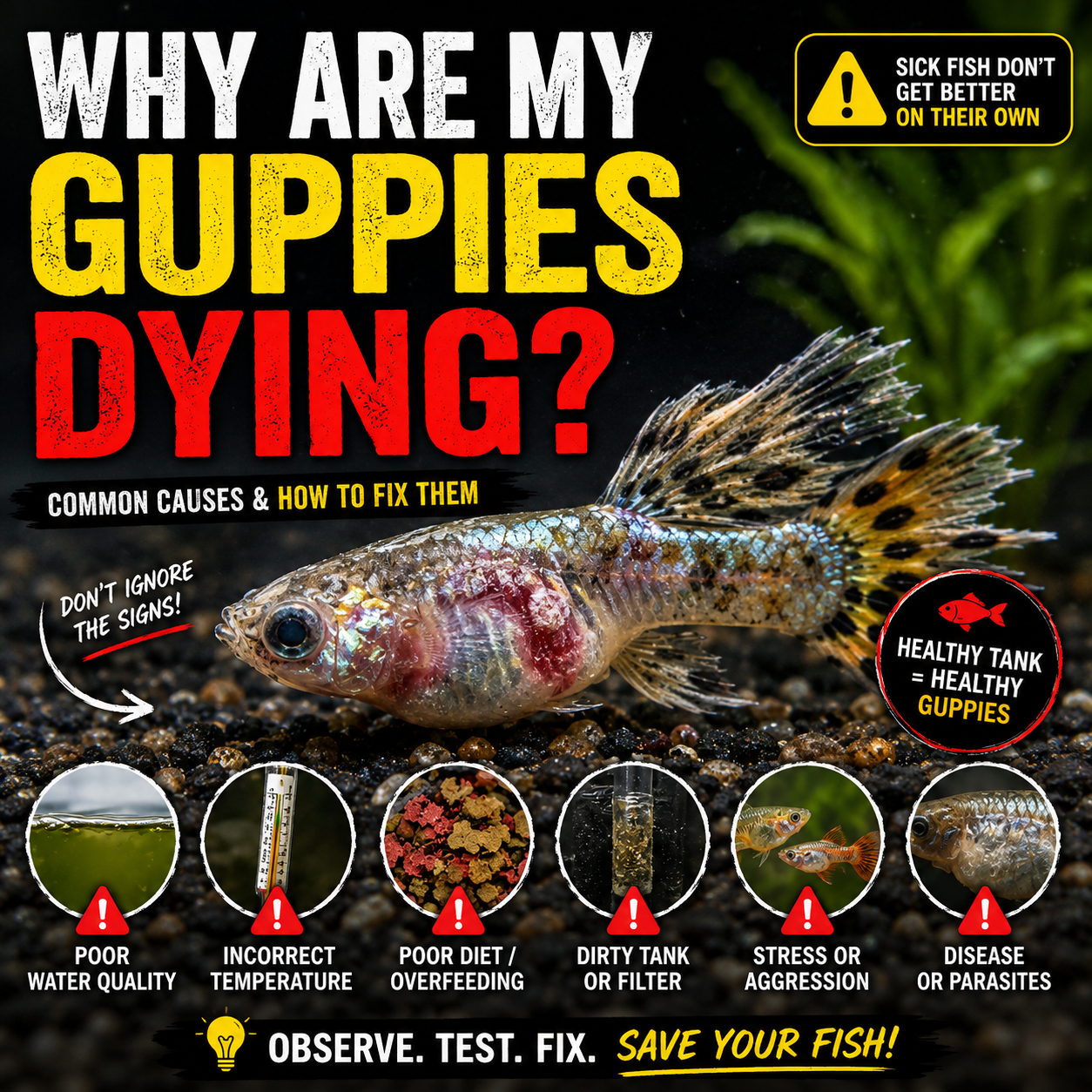
Why Are My Guppies Dying? Common Causes and How to Save Them
Guppies are universally celebrated as the crown jewels of the freshwater aquarium hobby. With their dazzling array of tail shapes, vibrant iridescent colors, and energetic swimming patterns, it is easy to see why aquarists of all experience levels fall in love with them. However, nothing tests the patience of a fish keeper quite like experiencing a sudden and unexplained decline in their tank population. If you find yourself asking why your guppies are dying, you are certainly not alone. Guppy mortality can be caused by a multitude of factors, ranging from subtle chemical shifts in the water column to improper nutrition, genetic vulnerabilities, and underlying health diseases.
Successfully keeping these resilient yet sensitive livebearers requires a comprehensive understanding of their biological needs. Whether you are maintaining a specialized line of show fish like the Supreme Blue Metallic Lace or simply enjoying a colorful mixed community tank, identifying the root cause of distress is the first step toward turning things around. In this extensive guide, we will explore the primary culprits behind guppy deaths and provide actionable, proven strategies to save your remaining fish and foster a thriving, balanced aquatic ecosystem.
1. Water Parameter Instability and Chemical Spikes
The single most frequent catalyst for sudden guppy mortality is unstable water chemistry. Guppies originate from warm, moderately hard, and alkaline waters in South America and the Caribbean, meaning they prefer specific environmental conditions to truly thrive. When parameters swing wildly, a guppy's delicate osmoregulatory system struggles to cope, leading to severe physical stress.
- Ammonia and Nitrite Poisoning: In newly established aquariums, or tanks that have been overstocked and overfed, beneficial bacteria may fail to process fish waste quickly enough. Even trace amounts of ammonia or nitrite can burn guppy gills, suffocate them, and cause rapid death.
- pH and Hardness Fluctuations: Guppies prefer a stable pH range between 7.0 and 8.2. Rapid shifts in pH—often caused by using the wrong substrate, adding driftwood that leaches excessive tannins, or failing to perform regular water changes—can shock the fish.
- Temperature Shocks: Maintaining a stable water temperature between 22 and 28 degrees Celsius is critical. Unreliable heaters or performing large water changes with significantly colder water can trigger white spot disease (Ich) or cause immediate systemic shock.
2. The Danger of Overcrowding and Inadequate Filtration
Because guppies are prolific breeders, hobbyists often make the mistake of adding too many fish to a confined space. Overcrowding accelerates the accumulation of organic waste, depletes dissolved oxygen levels, and drastically increases territorial aggression. Even if you start with a modest number, unmonitored livebearer breeding can quickly overwhelm a nano or medium-sized tank. Ensure your filtration system is rated for a higher capacity than your actual tank volume, and commit to weekly partial water changes of 20 to 30 percent to dilute nitrates and replenish essential trace minerals.
3. Nutritional Deficiencies and Improper Feeding
Dietary health directly dictates immune function, longevity, and color vibrancy. Feeding low-quality flakes or inconsistent scraps can leave guppies malnourished, making them far more susceptible to bacterial and fungal infections. Furthermore, overfeeding is a silent killer; leftover food rots at the bottom of the tank, fouling the water, while gorged fish suffer from severe constipation and swim bladder disorders.
To safeguard your fish against nutritional decline, always invest in targeted, premium foods. A specialized diet like the Hikari Fancy Guppy delivers premium nutrition formulated specifically for fancy guppies and other small livebearers, ensuring they receive balanced daily nourishment to support vigorous growth, vibrant coloration, and robust immune defenses.

4. Lack of Environmental Enrichment and Cover
Guppies are naturally active surface-dwellers that appreciate a densely planted, dynamic environment. Without adequate hiding spots, dominant fish can relentlessly bully weaker tank mates, causing chronic stress that eventually proves fatal. Integrating live aquatic plants into your scape provides essential sanctuary zones, breaks line-of-sight aggression, and helps naturally filter organic pollutants out of the water column.
One of the best choices for both beginners and advanced aquascapers looking to enhance their tank layout is the Anubias Nana Petite Pot. This compact, slow-growing aquarium plant features small, hardy green leaves that look breathtaking when attached to driftwood or rocks, creating natural grazing platforms and visual depth without requiring complex CO2 injection systems.

5. Accumulated Detritus and Algae Overgrowth
An unclean aquarium is a breeding ground for harmful pathogens, parasites, and opportunistic bacteria. As uneaten food, fish waste, and decaying plant matter settle into the substrate, they release toxic compounds that compromise the health of your guppies. Controlling organic debris and managing nuisance algae is non-negotiable for long-term aquarium success. Fortunately, you do not have to manage tank cleanliness entirely on your own; deploying a dedicated cleanup crew can revolutionize your maintenance routine.
Depending on the scale of your aquarium ecosystem, you can choose a professional cleaning bundle tailored to your tank's volume:
- For nano setups and smaller planted aquariums, the $80+ Value Small Clean Up Crew provides a high-impact team of nerite snails and uniform-color shrimp designed to graze surfaces and clear fine debris without overloading compact systems.
- For larger community aquariums, the $160 Value Medium Clean Up Crew delivers superior algae control and comprehensive waste management through a balanced combination of black helmet nerites, mystery snails, and specialized freshwater shrimp.
Actionable Steps to Save Your Remaining Guppies
If you are currently experiencing losses in your aquarium, immediate intervention can stabilize the environment and rescue vulnerable fish. Follow this emergency recovery checklist:
- Test Your Water Immediately: Check ammonia, nitrite, nitrate, and pH levels using a reliable liquid test kit to rule out chemical poisoning.
- Perform an Immediate Water Change: Change 30 to 50 percent of the water using a quality conditioner to instantly dilute toxins and lower organic loads. Ensure the replacement water matches your tank's current temperature.
- Adjust Feeding Practices: Halt feeding for 24 to 48 hours to let the biological filter catch up and allow sick fish to clear their digestive tracts. Resume feeding sparingly with high-grade nutrition.
- Quarantine Sick Fish: If you notice clamped fins, white spots, or lethargy, move affected individuals to a separate hospital tank to prevent the spread of disease to healthy inhabitants.
By understanding the critical requirements of your livebearers, maintaining strict water discipline, and providing a balanced ecosystem complete with proper nutrition and dedicated tank cleaners, you can put an end to unexplained guppy losses. Stay proactive, monitor your parameters regularly, and enjoy the rewarding experience of maintaining a vibrant, flourishing freshwater aquarium.


Laisser un commentaire
Ce site est protégé par hCaptcha, et la Politique de confidentialité et les Conditions de service de hCaptcha s’appliquent.